
An ancient therapy, studied by modern science.
Acupuncture is a therapeutic method that addresses the causes of a disorder from the earliest stages of illness — and, combined with a suitable lifestyle, becomes a genuine form of prevention.
Research over recent decades increasingly supports the existence of a system of energy channels (meridians) — biological and electromagnetic — connecting the acupuncture points on the skin, the ear and other areas, through which effects are produced at a distance. Research of this kind is also being carried out in Romania.
Sessions are performed by a doctor only, under strict hygiene conditions, using sterile single-use needles. Treatment is personalised and, where appropriate, delivered together with a multidisciplinary team.
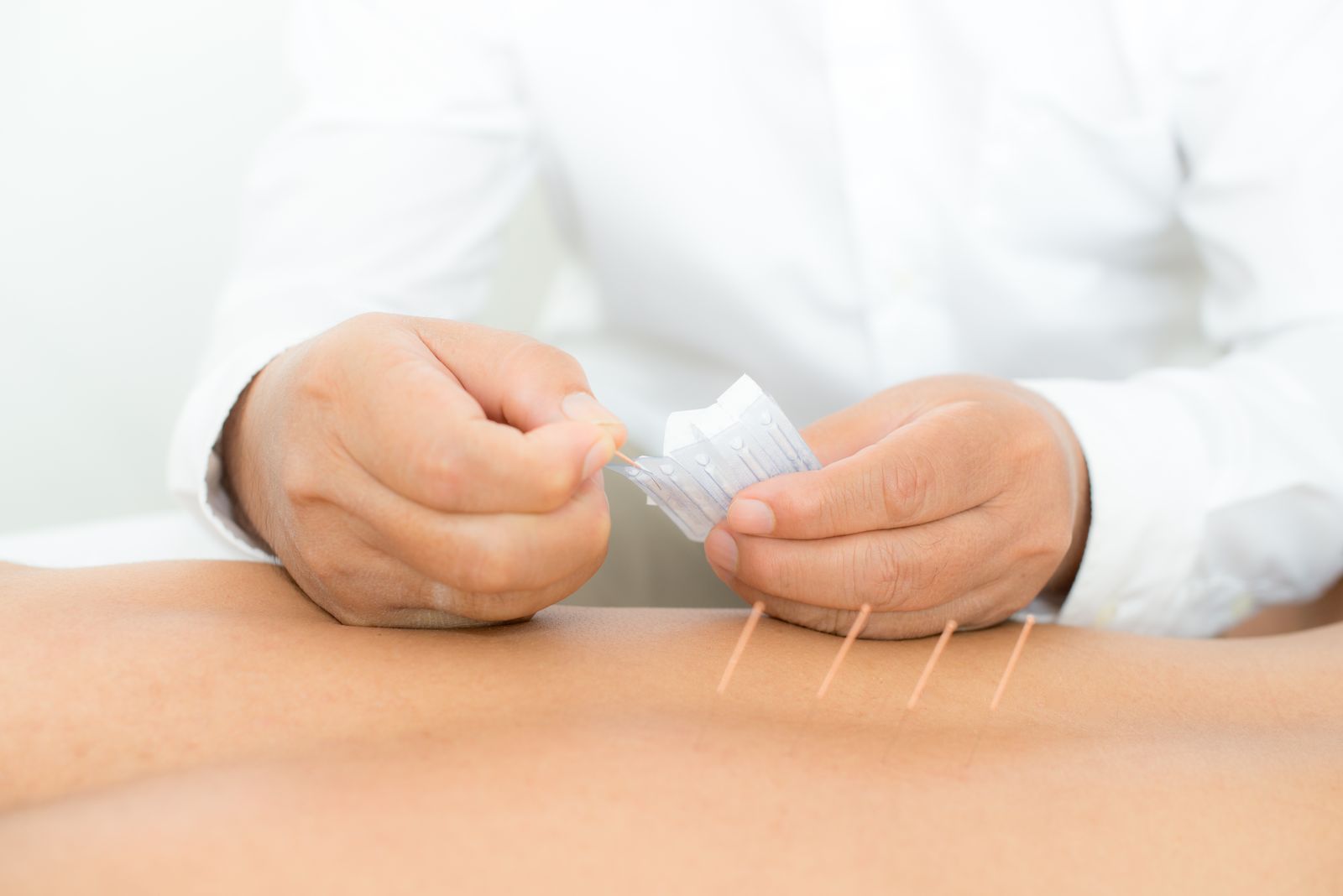
Acupuncture — one of the most widely used preventive methods.
It works on subtle energetic imbalances — those that appear before illness sets in, and which conventional diagnosis cannot yet detect.
Acting early
Even people without a medical diagnosis carry subtle disturbances at the energetic level — brought on by stress, poor nutrition, an unhealthy routine and environmental toxins. Left unaddressed, these lead over time to established disease.
Recommended courses
To maintain balance, we recommend 3–4 courses a year of 5–10 sessions each, spaced 3–4 months apart — timed according to the acupuncture assessment.
A broad range of conditions — eight main groups.
Acupuncture is effective for a wide range of conditions, on its own or alongside other approaches (integrated treatment). The most common indications are listed below.
Joint & muscle pain
- Back pain
- Cervical & lumbar spondylosis
- Torticollis
- Muscle cramps
- Joint pain (knees, shoulders, elbows)
Neurological pain
- Migraine
- Neuralgia
- Diabetic neuropathy
- Post-herpetic (shingles) pain
- Lumbar sciatica
Psychological & emotional
- Insomnia
- Anxiety
- Mild to moderate depression
- Chronic fatigue
Respiratory conditions
- Asthma
- Chronic bronchitis
- Recurrent sinusitis
- Allergic rhinitis
Cardiovascular conditions
- Palpitations
- High blood pressure
- Circulatory disorders
Immune disorders
- Recurrent infections
- Allergies
- Autoimmune phenomena
Digestive conditions
- Gastritis
- Peptic ulcer
- Constipation
- Bloating
- Irritable bowel
Gynaecological & urogenital
- Menstrual pain
- Infertility
- Prostatitis
- Chronic cystitis
Three areas where acupuncture makes a real difference.
In neurological conditions
- · Post-stroke rehabilitation
- · Spasticity, paresis, paraesthesia
- · Vertigo & dizziness
- · Trigeminal neuralgia
- · Facial palsy
- · Painful disc herniation
- · Diabetic neuropathy
- · Migraine, intercostal neuralgia
In psychological & emotional disorders
- · Insomnia
- · Anxiety
- · Mild to moderate depression
- · Chronic fatigue
- · Stress-related disorders (palpitations, gastritis)
- · Stress-related allergies & recurrent infections
In treating addiction
- · Tobacco dependence
- · Alcohol dependence
- · Overeating (sweets, carbohydrates)
- · Support in managing obesity
In all of these cases, treatment is personalised and may involve a multidisciplinary team, working with your own doctor or with the specialists at our centre.
Why choose medical acupuncture.
A natural treatment
It stimulates the body’s own capacity to heal, without synthetic medicines and without side effects.
Effective prevention
Used to prevent conditions from developing — by restoring energetic balance and managing stress.
Complementary therapy
It can be combined with herbal medicine, homeopathy and conventional medicine for complete, integrated treatment.
For the curious
A short history of acupuncture
Archaeological and anthropological research shows that ideas about energy channels and the therapeutic effects of stimulating the skin by pressure, pricking, scratching or heat date back to prehistory. The Ebers Papyrus (Egypt, 1550 BC) describes a system of twelve channels through which energy flows. Peoples across the world — the Bantu in southern Africa, communities of the Amazon rainforest, the Inuit — have used similar methods over the centuries.
The discovery of Ötzi, the man preserved in Alpine ice some 5,300 years ago, revealed tattoos on his skin marking precisely those acupuncture points useful for treating the conditions found at autopsy.
The credit for systematising this knowledge into medical treatises, and developing it continuously, belongs to Chinese civilisation. The first treatise of Traditional Chinese Medicine, the Huang Di Nei Jing, represents medical knowledge accumulated over roughly 3,500 years (from 2700 BC to AD 800).
Today, modern research increasingly brings to light this system of biological and electromagnetic meridians — through imaging as well as clinical practice. Research of this kind is also being carried out in Romania.